-
A three act play
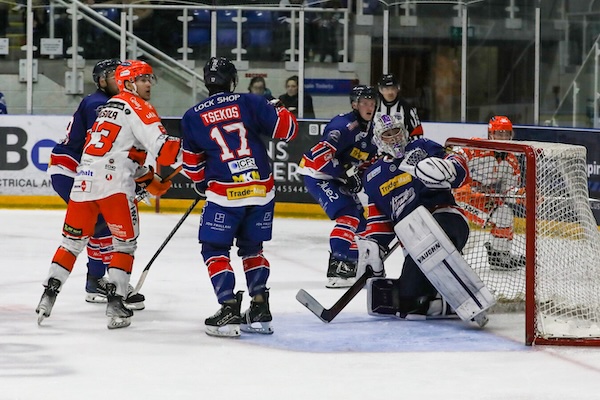
Cardiff 1 – 4 BelfastWed 28th October 2026 This match was an embodiment of Marx’s quote that history repeats itself, the first time as tragedy, the second time as farce. The first period was history, another goalless, cautious encounter that matched that of Saturday’s game. The second period was tragedy as the Devils were out fought, but looked to have only conceded one goal before slacking off and conceding another with six seconds on the clock. Which left the third period to offer up farce. This came in the form of some poor refereeing, more fights than goals and some next level shit-housery from the Giants. In the after match…
-
The Value of Expected Goals
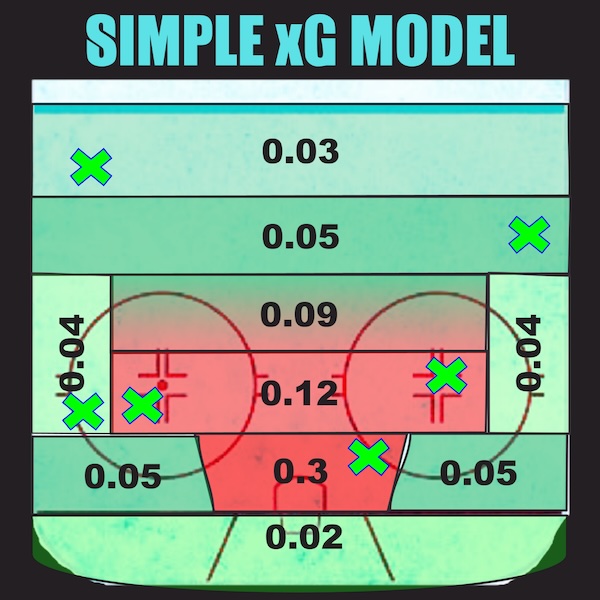
(Image from https://insidetherink.com/inside-the-stats-expected-goals/) There are still a couple of games remaining in the season, but we can safely do some season analysis now. In this post I want to dig into Expected Goals (xG) and Expected Goals Against (xGA). These are defined as “a performance metric that estimates the probability of a shot resulting in a goal, based on factors like shot location, angle, and assist type”. There are different ways of calculating it, and I’m taking the figures provided by the EIHL here. It tells you how many goals your team was likely to have scored if you could replay that game a 100 times or so, thus taking…
-
The challenge of the cup
I know this will be dismissed as sour grapes after the Belfast Giants beat the Cardiff Devils in the Challenge Cup final, but to be fair, I’ve been critical of the Challenge Cup format since the start of the season. The structure this year demonstrates the difficulties of the EIHL and the poor compromise decisons that are made in order to accommodate these. Firstly, congratulations to Belfast, they were deserved winners, and are clearly the best team in the league. That however, is the issue I think. A cup competition should not be weighted in favour of the best team. They might well end up winning it because they are…
-
Who are the close game win specialists?
I think one of the signs of a good team is their ability to regularly convert close games into wins. I’ve chosen to define a close game as one where going into the 3rd period, teams are level or there is a one goal difference. This definition does exclude remarkable comebacks, for example if you’re 3 down going into the third and convert that to a win, then that is often a sign of battling spirit. But if could also signal a complete collapse by the opponent or a slew of penalties. It’s also less common, so the ability to see out a close game is I feel, more telling…
-
Shot creation
Each gamesheet the EIHL provides gives us a tally of the High, Medium and Low danger shots, based on where those shots took place. Obviously you want to create lots of high danger shots and not give up many. A high danger shot would be something like a player in the slot with a clear sight of goal, an odd man rush, etc. So, let’s take a look at how meaningful these figures are. To take an example of when they are not very meaningful, look at Cardiff’s 6-0 away win at Manchester. They must have created a lot of high danger chances, right? Nope, zero recorded. Okay then, they…
-
Quarter season check-in
As all teams have no played a minimum of 13 league games, we can have a look at how they are faring across various stats. I’m taking the first 13 games for each team here, which means of course that some teams will have played tougher opponents more often than others, but it’s a reasonable snapshot. I looked at netminder stats in the last post so I won’t cover any of them here, as they haven’t changed much, although with the Devils having both netties injured, that might soon impact on their previously impressive numbers. First up, let’s look at some shot related statistics. Corsi is the number of all…
-
Gauging offences & defences so far
How are teams performing offensively and defensively from an analytics perspective? There are several ways you could look at this – the average number of goals scored and conceded (or just the difference between the two) would be one simple measure. So with the usual caveats that we are a) too early in the season to have meaningful data yet and b) teams have not played an equal number of games, let’s do that to start with. This gives us the following ranking, considering league games only: Shef 2.333333333 Cov 1.75 Car 1.555555556 Gui 1 Not 0.5 Bel 0 Man -0.75 Dun -1.125 Fif -2.333333333 Gla -2.444444444 Average goal difference…
-
Special teams bonanza – thoughts from the weekend 19th Oct
It is an accepted truth that in the NFL, special teams win games. With ball of its specialised plays, that is perhaps not surprising in American Football, but hockey is a more fluid game, so while the special units are important, they are not as significant in determining the outcome. Apart from this weekend that is. Apart from Friday’s match up between the Storm and Clan, every team that performed better on PP and PK was victorious (the Flyers and Flames drew on these, both being inefficient in their PPs). The average PP efficiency for the winning team was 45% compared with 13.5% for the losing teams. Which means that…
-
Some analytics thoughts from weekend 5th Oct 24
Giants 3 – 1 Devils. The Devils were one up going into the third, but conceded three in that final period. I blogged before about how important that ability to win close games is (defined as ones where there is a one goal or tie going into the third). The Giants demonstrated that on Saturday. This prompted me to look back at the data from last season. I suspected that close wins might be more prevalent at home, so counted the close wins up for each team, and divided by their total number of close wins to give a percentage. We’re dealing with fairly small sample sizes here, the total…