Some analytics thoughts from weekend 5th Oct 24
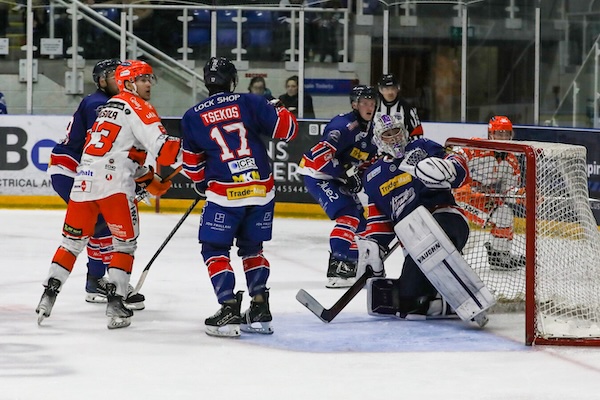
Giants 3 – 1 Devils. The Devils were one up going into the third, but conceded three in that final period. I blogged before about how important that ability to win close games is (defined as ones where there is a one goal or tie going into the third). The Giants demonstrated that on Saturday. This prompted me to look back at the data from last season. I suspected that close wins might be more prevalent at home, so counted the close wins up for each team, and divided by their total number of close wins to give a percentage.
We’re dealing with fairly small sample sizes here, the total range of close wins was 24 (Sheffield) to 39 (Coventry). And then the proportion of those that were at home ranged from 5 (Fife and Glasgow) to 13 (Belfast). The absolute figures can be misleading here, since good teams will have fewer close wins because they have the game wrapped up already. As a percentage then the range of close wins at home goes from 38% (Glasgow) to 68% (Belfast), with an average of 49%. So, interestingly Home or Away doesn’t seem to make much of a difference. You might have hypothesised that a home crowd would urge teams on in the final period of close games, and that would make a difference, but overall that doesn’t seem to be the case. It does however, seem relevant for Belfast, with that 68%. So, the Devils going into the 3rd with only a 1 goal lead should not have been that surprised to come away with nothing.
Dundee Stars 2 – 6 Sheffield Steelers. The close win advantage can be seen in this game also, with the teams level going into the third. As LeFebvre said in his post game interview, the Stars matched the Steelers for 50 minutes or so (but 10 minutes is a loooong time in hockey). The scoreline is harsh on the Stars, as the tracking data shows they matched Sheffield pretty much exactly for High and Mid danger shots – 2 and 24 vs 2 and 23 respectively. The Steelers had more low danger shots, which may just indicate more offensive zone possession. Shots on goal were pretty evenly matched also, with Stars clocking 36 to Steelers 39. One of the Steelers late goals was an empty netter, but in general it seems that ability to convert some mid-danger shots into actual goals was the key. The Goals Saved Above Expected (GSAx) for Dundee was -2.74, which may suggest that Fiske did not have the best night, but is probably more indicative of squad depth going into the final ten minutes and the Stars getting caught out on the break.
(image courtesy of Dundee Stars)

